
Author: Tino Schwanemann
-

From Dada to Data: What Contemporary Generative Design Can Learn
At first glance, the experimental collages of Dada and today’s generative design systems seem to share a common logic: fragmentation, recombination, and the use of existing material. Yet their cultural intentions could hardly be more different. While artists such as Raoul Hausmann, Hannah Höch, and Kurt Schwitters used disruption and contradiction to challenge established systems…
-

The Loss of Distance: Real-Time Systems, Perception, and the Digital Present
Contemporary digital systems increasingly eliminate temporal, spatial, and cognitive distance. Drawing on Paul Virilio and Vilém Flusser, this essay examines how real-time interfaces, AI, and platform logics transform perception into an operational process of immediacy, prediction, and behavioral stabilization. In contrast to media artists of the 1960s and 70s who used technology to expose interruption,…
-

Vilém Flusser, Technical Images, and the Aesthetics of Coded Systems
Contemporary digital design increasingly operates through systems, interfaces, and algorithmic processes rather than fixed visual objects. Revisiting Vilém Flusser’s theory of technical images, this essay examines how contemporary practices by artists and studios such as Defasten, Refik Anadol, Ryoji Ikeda, and Casey Reas reveal a profound cultural shift: from images as representations to images as…
-
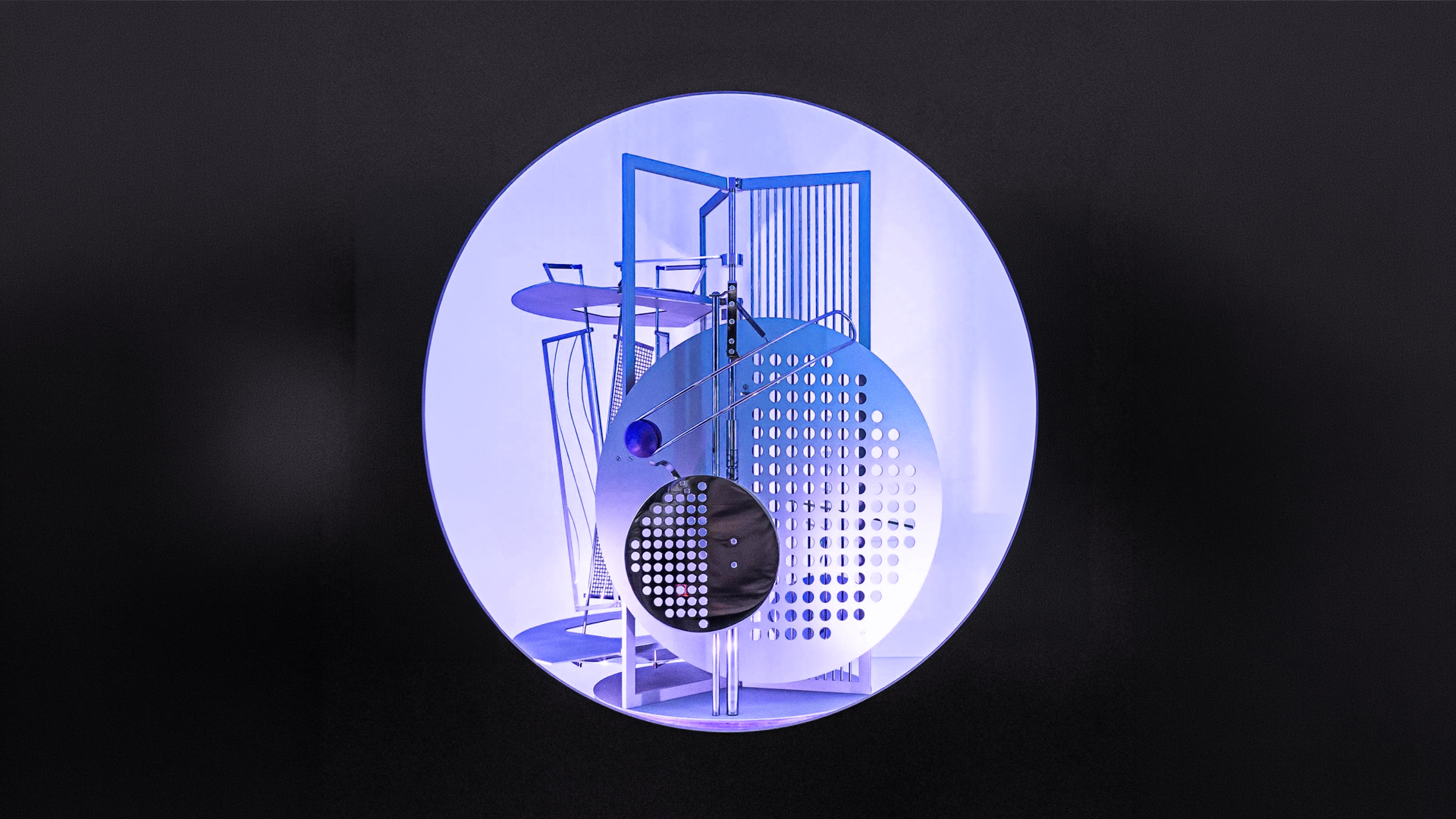
From Perception to Prediction
Contemporary AI systems promise adaptability, prediction, and optimization. Yet many of the concepts behind today’s data-driven technologies already emerged in the cybernetic art and design experiments of the 1960s and 1970s. The crucial difference lies in their cultural function. While postwar artists and designers developed open systems to expand perception, contemporary AI increasingly transforms systems…
-

Narratives as Design Practice in the Startup Context: Reflections from a Design Perspective
If narratives are understood as designed systems, design education must move beyond the production of artifacts. It requires the ability to situate visual and interactive outcomes within broader narrative structures. Design thus emerges not merely as aesthetic practice, but as a strategic discipline that shapes meaning, perception, and action.