How Data and AI Are Transforming Open Systems into Systems of Control
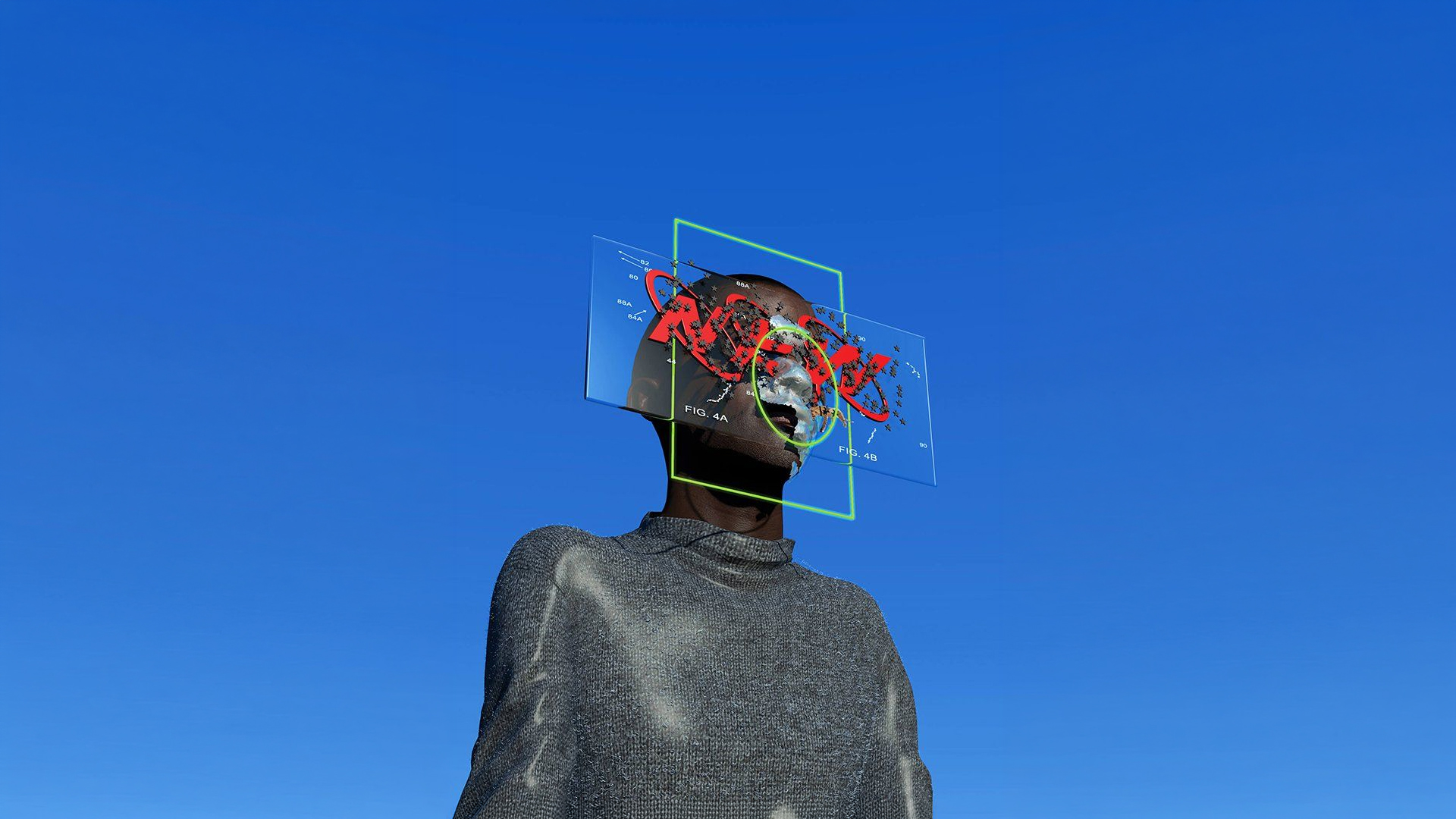
Contemporary discussions around AI and data-driven systems are often framed through the language of progress. Systems are becoming more intelligent, adaptive, and efficient. Interfaces respond in real time, platforms anticipate behavior, and algorithms personalize communication with remarkable precision. Data is increasingly understood as the foundation of a new form of technological sensitivity.
Podcast on Spotify
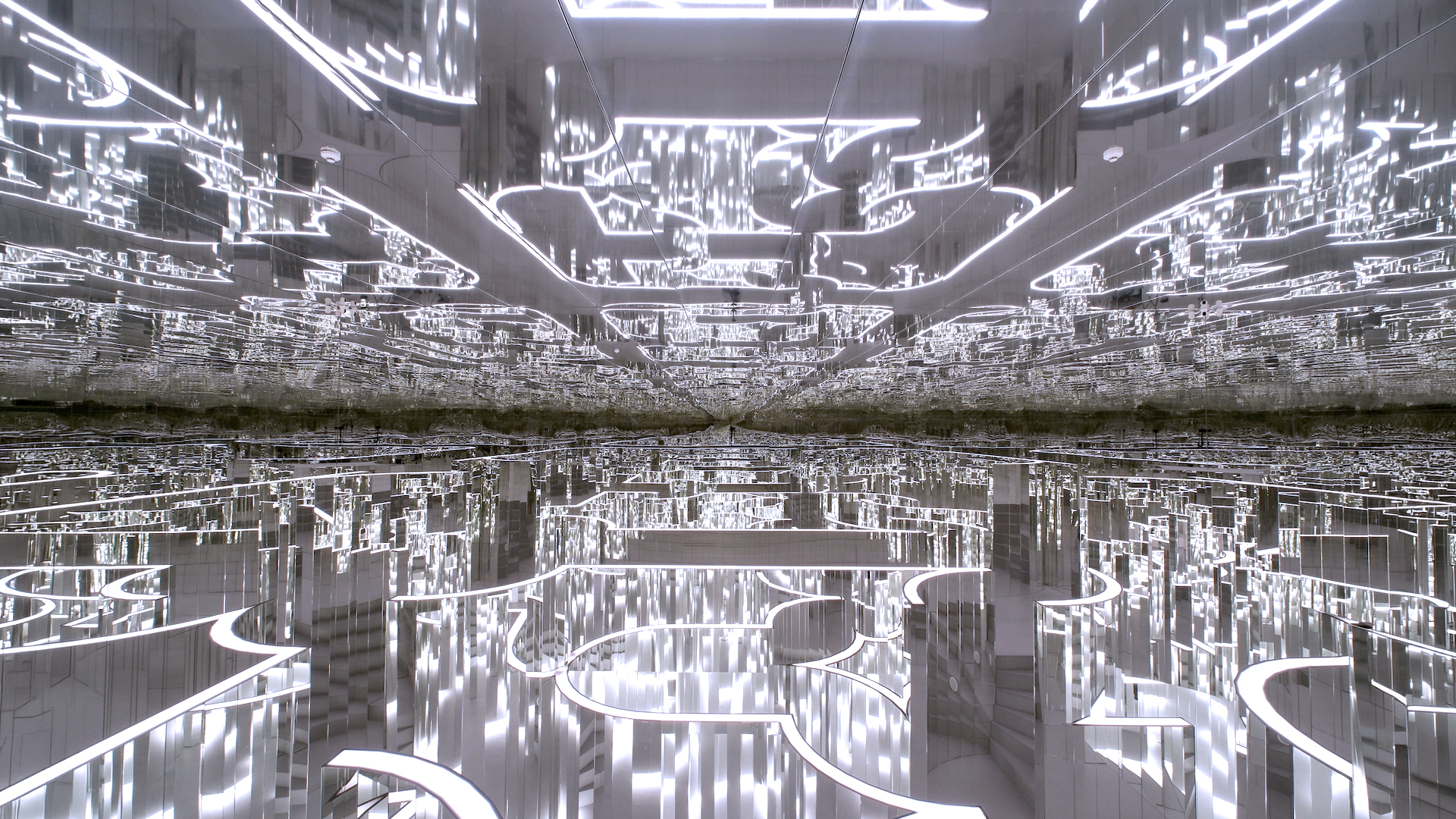
What is striking, however, is how closely many of these concepts resemble ideas that already emerged within art and design discourse during the 1960s and 1970s. Feedback, interaction, cybernetics, responsive environments, open systems, and real-time processes were all central concerns long before the emergence of contemporary AI systems.


The decisive difference lies not in the technology itself, but in the cultural function assigned to these systems. The postwar avant-garde understood systems primarily as instruments for expanding perception. Contemporary AI systems, by contrast, increasingly operate as instruments of prediction and behavioral stabilization. This shift marks a fundamental transformation in the relationship between technology, culture, and design.
Moholy-Nagy and the Open System of Perception
An early anticipation of this trajectory can already be found in the work of László Moholy-Nagy and his Light-Space Modulator from 1930. In retrospect, the work appears almost proto-cybernetic. Light, movement, reflection, space, and time form a dynamic structure of continuous transformation. The work does not produce stable images, but variable perceptual situations.


What matters here is not the machine itself, but its cultural logic. Moholy-Nagy did not understand technology as an instrument of control, but as an extension of human perception. The Light-Space Modulator generates instability, ambiguity, and sensory openness. Meaning emerges relationally between object, space, light, and viewer.
In this respect, Moholy-Nagy’s work differs fundamentally from many contemporary data-driven systems. While current AI and platform logics primarily seek prediction, optimization, and behavioral management, the Light-Space Modulator operates in the opposite direction. It destabilizes perception instead of standardizing it. The work therefore appears less as a precursor to contemporary control systems than as a model of an open technological ecology.
Cybernetics as a Cultural Paradigm
Postwar cybernetics was far more than a technical theory. It introduced a new understanding of the relationship between humans, machines, and environments. Systems were no longer conceived as linear mechanisms, but as dynamic processes of communication, feedback, and adaptation. This way of thinking profoundly influenced art, architecture, and design.


Artists such as Nicolas Schöffer and Roy Ascott developed works based on interaction, feedback, and environmental responsiveness. These systems reacted to movement, light, and human presence. Crucially, however, they were not designed to control behavior. They were intended to expand perception.


Their openness was essential. The behavior of the system remained partially unpredictable. Meaning emerged situationally and relationally, often through the active participation of the viewer. This is precisely what distinguishes early cybernetic aesthetics from many contemporary data systems.
Kinetic Art and the Openness of Systems
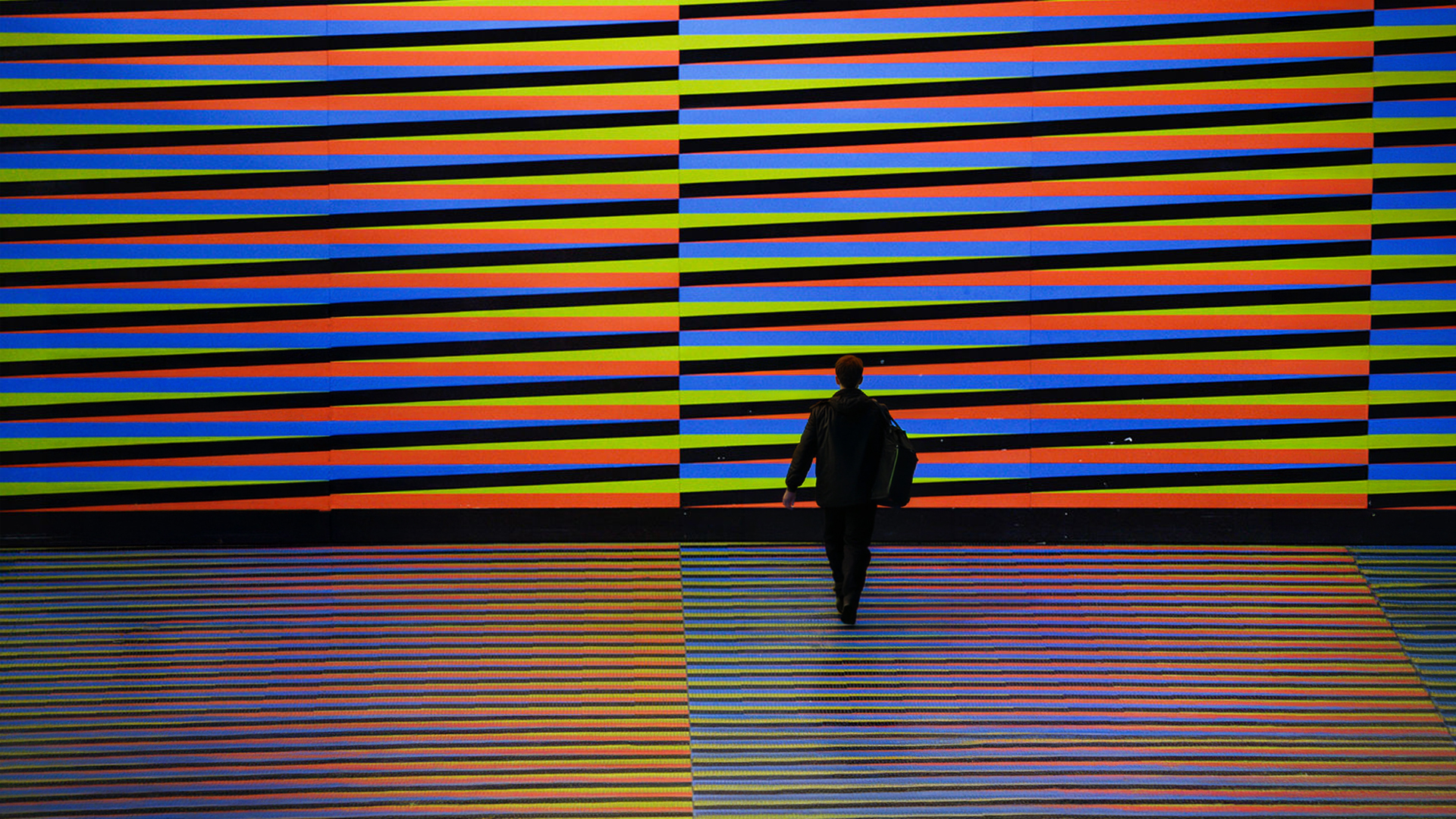
This distinction becomes particularly visible in the context of kinetic art and systemic artistic practices after 1945. Artists such as Carlos Cruz-Diez, Alexander Calder, Heinz Mack, Otto Piene, and Yaacov Agam worked with movement, serial structures, light, time, and spatial transformation as integral components of their works.


Formally, many of these works appear strikingly contemporary. Grids, modular structures, perceptual variability, and algorithmic repetition often resemble contemporary digital interfaces or generative visual systems. Yet their purpose was fundamentally different. These artistic systems were not designed to stabilize perception, but to unsettle it. Color, movement, and spatial relations were used to destabilize visual certainty and actively involve the viewer in the production of meaning.


The work of Carlos Cruz-Diez demonstrates this particularly clearly. In his practice, color does not exist as a fixed property of an object, but emerges situationally through movement, light, and spatial position. Perception becomes an open process of continuous transformation.
A similar logic can be found in the mobiles of Alexander Calder. His configurations shift through air movement and gravity. The work never remains identical to itself. Meaning emerges through temporal and relational change.
Likewise, the artists of the ZERO, especially Heinz Mack and Otto Piene, understood light, movement, and energy as open systems. Technology was not approached as a mechanism of control, but as a medium of sensory and cultural expansion.


Yaacov Agam developed works that transform continuously according to the viewer’s position. The image does not exist as a fixed entity, but as a variable perceptual structure.
What unites these artistic positions is a shared understanding of systems as fundamentally open, unstable, and not entirely controllable. It is precisely this openness that generates cultural relevance. Contemporary data-driven systems increasingly pursue the opposite objective. They reduce uncertainty, optimize orientation, and seek to make behavior predictable. Algorithms minimize friction, simplify decisions, and stabilize attention. Open perceptual systems are gradually turning into systems of control.


From Feedback to Prediction
This shift is central to understanding contemporary AI systems. Early cybernetic models operated through feedback. Systems reacted to their environments and transformed through those interactions. Feedback implied openness toward change. Contemporary platform systems, by contrast, operate primarily through prediction. They analyze past behavior, identify statistical probabilities, and anticipate future actions. The objective is no longer the expansion of perception, but the stabilization of behavior.


This transformation also changes the cultural role of design itself. Historically, design often functioned as a practice of reflection, disruption, and perceptual reorganization. Design created systems capable of revealing alternative perspectives and new forms of relation. Today, design is increasingly integrated into operational logics. Interfaces are expected to function frictionlessly, communication is personalized continuously, and systems are optimized to guide behavior efficiently. Design becomes part of data-driven optimization processes.


This raises an important question: whether contemporary AI systems truly continue the cybernetic tradition, or whether they fundamentally reverse its original openness.


Design Futuring and the Question of Openness
Current discussions around Design Futuring are deeply connected to this problem. The issue is not simply technological innovation, but the question of what kinds of futures design enables or suppresses. Tony Fry describes design not as neutral problem-solving, but as an active process of producing futures. Design structures possibilities. From this perspective, the dominance of predictive systems appears deeply ambivalent.
On the one hand, AI and data systems undoubtedly enable new forms of complexity management. On the other hand, these systems increasingly derive the future from statistical patterns of the past. Novelty no longer emerges through uncertainty, interpretation, or cultural disruption, but through probabilistic continuation. This may ultimately describe one of the defining cultural shifts of the present. The systems of postwar modernism sought to open perception. The systems of the present seek to stabilize behavior. The distinction is fundamental.


Open systems accept uncertainty as a condition of transformation. Control systems attempt to eliminate it. Perhaps one of the central tasks of design today is therefore to develop technological systems that preserve openness rather than reduce it.
Not every form of technological intelligence produces cultural intelligence. And not every adaptive system is truly open.
References
Ascott, R. (1968). The cybernetic stance: My process and purpose. Leonardo, 1(2), 105–112.
Burnham, J. (1968). Systems esthetics. Artforum, 7(1), 30–35.
Calder, A. (n.d.). Mobiles. Alexander Calder Foundation
Cruz-Diez, C. (2015). Color in space and time. Fundación Cruz-Diez.
Dubberly, H. (2008). The relevance of cybernetics to design. Dubberly Design Office.
Fry, T. (2009). Design futuring: Sustainability, ethics and new practice. Berg.
Haacke, H. (1965). Condensation Cube. In H. Haacke, Hans Haacke: Unfinished business. New Museum Digital Archive
Mack, H. (2014). ZERO: Avantgarde of the 1960s. Hatje Cantz.
Moholy-Nagy, L. (1947). Vision in motion. Paul Theobald.
Moholy-Nagy, L. (1930). Light-Space Modulator. Bauhaus Kooperation Berlin Dessau Weimar
Piene, O. (2011). More sky. MIT Press.
Schöffer, N. (1963). The new spirit of art. Pergamon Press.
Wiener, N. (1948). Cybernetics: Or control and communication in the animal and the machine. MIT Press.
ZERO Foundation. (n.d.). ZERO movement archive. ZERO Foundation
Agam, Y. (1989). Beyond the visible: The art of Yaacov Agam. Harry N. Abrams.