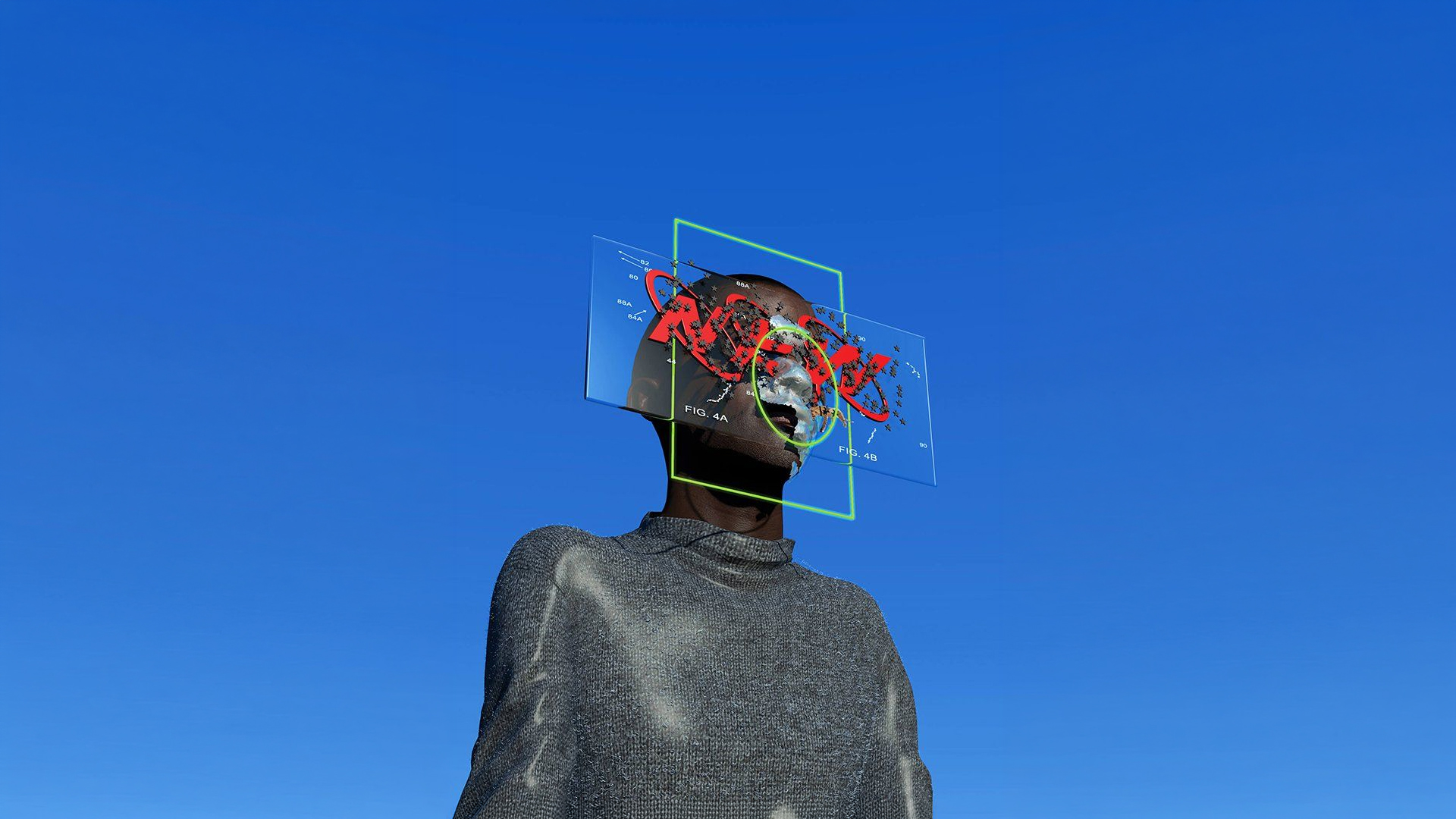
In recent years, I have found myself returning to a question that appears deceptively simple: what does design actually do today? The increasing integration of AI into branding and communication is often framed as progress. Flexibility, scalability, adaptability. These are the dominant terms. What is rarely questioned, however, is the underlying understanding of design that informs this development.
Podcast on Spotify
If we take that question seriously, we inevitably arrive at the Bauhaus. It was not a stylistic movement. It was an epistemic shift. It redefined design as a discipline that mediates between technology, society, and perception.


The Bauhaus’ ambition was not to produce new forms, but to establish the conditions under which form becomes meaningful. In that sense, design became a way of thinking.
What emerged from this was a systemic understanding of design. Adaptability was never understood as arbitrariness. It was always grounded in structure. Systems were open, but not unstable. They allowed variation without losing coherence.


This perspective was further developed in the post-war period, most notably at the Hochschule für Gestaltung Ulm. Here, design explicitly moved beyond the object. It became a question of relationships, processes, and systems. Influenced by cybernetics, information theory, and semiotics, design was reframed as the organization of complexity.
Adaptability, in this context, was not the absence of rules. It was the result of them. A system can only adapt if it is structured enough to absorb variation.
System as the Condition of Adaptability
A particularly clear example of this can be found in the corporate design of Lufthansa, developed by Otl Aicher. This system is often reduced to its visual clarity. What is more important, however, is its structure. Aicher developed a comprehensive design system based on grids, typographic rules, and a modular pictogram language. It was not designed to produce fixed outputs, but to enable consistent variation across contexts.


What we see here is not flexibility in the sense of freedom, but adaptability through constraint. The system defines the boundaries within which variation becomes meaningful. The Lufthansa identity demonstrates that adaptability is not achieved by loosening structure, but by designing it with precision.
Adaptability as Structured Variation
A more recent example, frequently cited in discussions around flexible branding, is the identity of the MIT Media Lab, developed by Pentagram.


The system allows for thousands of visual variations. Each iteration appears unique, yet all are derived from a clearly defined underlying logic. The variability is algorithmically controlled, but structurally grounded. This is often presented as an example of maximum flexibility. In fact, it demonstrates the opposite.
Variation is only possible because the system is highly constrained. Without these constraints, the identity would dissolve into arbitrariness. Adaptability here is not the ability to produce endless differences. It is the ability to maintain coherence across difference.


The Simulation of Adaptability
This brings us to current developments in AI-driven branding. A prominent example is the concept of “Branded AI” developed by MetaDesign. The promise is compelling. AI systems are trained to understand a brand’s tone, values, and visual language in order to generate consistent, on-brand communication across all touchpoints. Adaptability is framed as scalability. At first glance, this appears to extend the systemic thinking of modern design into the digital domain. On closer inspection, however, a fundamental shift becomes visible. What is modeled here is not a system in the design-theoretical sense, but a set of attributes. Brand identity is translated into data points that can be statistically reproduced. The system does not understand relationships. It recognizes patterns.


The result is consistency without coherence. This distinction is crucial. Consistency is repetition. Coherence is structural integrity. AI-based branding systems are highly effective at maintaining stylistic consistency. What they struggle with is contextual transformation. They generate variation, but within a narrow band of similarity.
Difference is minimized, not activated. What is presented as adaptability is, in many cases, only a simulation of it.


The video from eye square, a presentation of Prof. Carsten Baumgarth, Dr. Julia Nitschke and Andreas Fachner on so-called “conversation branding”, further illustrates this shift. It frames AI as a system capable of maintaining brand consistency across dynamic, dialogical interactions. At first glance, this appears to extend the idea of adaptability into real-time communication.
However, what becomes evident is that the system operates primarily by aligning outputs with predefined brand parameters rather than engaging with the relational complexity of the situation. The conversation is managed, not interpreted. What is presented as adaptive branding is, in fact, a controlled reproduction of identity across variable inputs. This reinforces the argument that current AI systems do not construct meaning through context, but stabilize it through pattern conformity.
From System to Model
In my own teaching and research, this shift becomes increasingly evident. Students present work that is formally precise, technically refined, and entirely plausible. And yet, something is missing. Not in the execution, but in the necessity of the decisions. The systems they use respond, but they do not interpret. They adapt, but they do not understand what they are adapting to.
This leads to a paradox. The more adaptive our tools appear, the more rigid their outcomes become.
They operate within predefined parameters that stabilize identity at the level of surface. What is lost is the ability to reconfigure relationships in response to genuinely new contexts. This marks a significant departure from the systemic thinking that emerged in the wake of the Bauhaus. There, design was not about controlling outputs, but about constructing relational structures that could evolve. Today, we are witnessing a shift: From systems to models. From relationships to attributes. From interpretation to generation.
Conclusion
If we consider the Bauhaus as a foundational moment in which design became a systemic discipline, then the current trajectory raises a critical question. Are we extending this legacy, or are we reducing it? The contemporary discourse around adaptability often confuses scalability with responsiveness. It assumes that the ability to generate variation is equivalent to the ability to engage with context. It is not.


Adaptability in design has never been about producing more. It has always been about relating differently. The challenge, therefore, is not to make brands more flexible in a technical sense, but to preserve their capacity for meaningful transformation.
References:
Gropius, W. (1965). The new architecture and the Bauhaus. MIT Press.
Lindinger, H. (Ed.). (1991). Hochschule für Gestaltung Ulm: Die Moral der Gegenstände. Ernst & Sohn.
Aicher, O. (1994). The world as design. Ernst & Sohn.
Wiener, N. (1961). Cybernetics: Or control and communication in the animal and the machine (2nd ed.). MIT Press.
Krippendorff, K. (2006). The semantic turn: A new foundation for design. CRC Press.
Kapferer, J.-N. (2012). The new strategic brand management (5th ed.). Kogan Page.
Manovich, L. (2019). Cultural analytics. MIT Press.
Pasquinelli, M. (2023). The eye of the master: A social history of artificial intelligence. Verso.
MetaDesign. (n.d.). Conversation branding and AI [Video]. YouTube. https://www.youtube.com/watch?v=UDa-qiGBaF0