The Future Begins Before It Exists
The future is perhaps the only phenomenon that profoundly shapes human behavior while remaining fundamentally inaccessible. We cannot observe it, remember it, or experience it directly. Unlike the past, it leaves no traces. Unlike the present, it cannot be perceived. And yet, almost every significant human decision is oriented toward something that does not yet exist.
Governments formulate long-term strategies. Scientists pursue discoveries that may take decades to materialize. Companies invest billions in technologies that have no established market. Designers sketch products that no one has asked for yet. Architects visualize cities that may never be built. Entire societies organize themselves around expectations of tomorrow. This raises a remarkably simple question.


How can human beings design a future they have never experienced?
The answer cannot be prediction alone. Forecasts, models, and data can estimate probabilities, but they cannot create possibilities. They tell us what is likely to happen if current conditions remain unchanged. Design, however, rarely begins from probability. It begins from imagination.
Before every innovation becomes a technology, it first exists as an idea. Before every city is built, it first exists as a drawing. Before every organization is founded, it first exists as a shared vision. The future, in other words, begins long before it becomes reality. It begins the moment someone imagines it.


This distinction may seem subtle, yet it fundamentally changes our understanding of design. Rather than asking how design creates the future, we might first ask a more fundamental question:
How does the future become imaginable at all?
For much of modern history, the future has been understood as something that unfolds through technological progress. Innovation was regarded as the driving force of historical change. New machines, infrastructures, and scientific discoveries appeared to move society steadily toward increasingly advanced states. Yet this explanation leaves something important unanswered. Technologies do not emerge in a cultural vacuum.
Before they are engineered, financed, manufactured, or adopted, they must first become conceivable. They require a conceptual space in which people are able to imagine them as meaningful, desirable, or even possible. Design occupies precisely this space. Its first contribution is not technological. It is imaginative.


Few philosophers have described this process more profoundly than Ernst Bloch. In The Principle of Hope, Bloch argues that human beings are fundamentally oriented toward what he calls the Not-Yet. Unlike other living organisms, people do not merely react to present conditions. They continuously anticipate worlds that have not yet arrived. Hope, in Bloch’s philosophy, is not optimism. It is an anthropological condition, a way of projecting oneself beyond existing reality toward unrealized possibilities.


This orientation toward the future is neither accidental nor secondary. It constitutes one of the defining characteristics of human culture. People do not simply inhabit reality. They inhabit expectations. The significance of this idea extends far beyond philosophy. It suggests that innovation is never purely technical. Every technological development begins with an act of anticipation. Every prototype embodies a world that does not yet exist. Every design proposal implicitly argues that reality could be organized differently.


Design therefore operates within what Bloch would describe as the realm of the Not-Yet. Its primary material is not steel, glass, or code. Its primary material is possibility.
If Bloch explains why individuals are capable of imagining futures, Cornelius Castoriadis shifts our attention toward society as a whole. His concept of the social imaginary proposes that societies are held together not merely by institutions or economic structures, but by collectively shared imaginaries. Democracy, progress, freedom, innovation, sustainability. These are not physical objects that exist independently of culture. They are social creations, maintained because communities collectively believe in them.
The future belongs to the same category. There is no single objective image of tomorrow. Instead, every society constructs its own visions of what tomorrow should become. The industrial age imagined a future of machines, factories, and continuous economic growth. The late twentieth century imagined a networked information society. Today, dominant images of the future often revolve around artificial intelligence, climate adaptation, biotechnology, or planetary exploration.


These futures differ dramatically. Yet they share one important characteristic. They exist first as collective imaginations before they become political agendas, economic strategies, or technological projects. This observation fundamentally changes how we understand design. Design does not simply respond to social change. It actively participates in constructing the collective imaginaries through which societies orient themselves toward the future.


This argument becomes even more intriguing through the work of Hans Vaihinger. In The Philosophy of “As If”, Vaihinger proposes that much of human thought operates through productive fictions. People constantly behave as if certain assumptions were true, even when they cannot yet be verified. Scientific models function this way. Economic systems function this way. Legal systems function this way. And perhaps design does as well.


Every concept sketch assumes that a future user exists. Every architectural rendering assumes that a future building will stand. Every speculative prototype assumes that a future society might emerge in which such an object becomes meaningful. These assumptions are not predictions. They are intellectual constructions that enable action in the present. Design therefore operates through a continuous logic of the as if. The prototype is valuable not because it accurately predicts tomorrow. It is valuable because it temporarily allows tomorrow to exist today. This subtle distinction has profound consequences. The role of design is not to forecast reality. It is to make alternative realities imaginable.
Taken together, Bloch, Castoriadis, and Vaihinger describe three complementary dimensions of human futurity. Bloch explains our orientation toward unrealized possibilities. Castoriadis explains how these possibilities become shared cultural imaginaries. Vaihinger explains how imagined realities guide present action.


Remarkably, none of these thinkers speaks directly about design. Yet their ideas reveal something fundamental about the discipline. Design does not begin with products. It begins with imagination. Before a designer draws a line, selects a material, or develops an interface, an image of a possible world already exists. The design process gives this image form. This observation also explains why discussions about the future are rarely driven by facts alone. Facts describe existing conditions. The future, however, cannot be described. It can only be imagined.
Every discussion about autonomous mobility, synthetic biology, artificial intelligence, or climate adaptation therefore depends upon representations that make these futures cognitively accessible. Without such representations, the future remains abstract. Without imagination, there can be no anticipation. Without anticipation, there can be no design. The future is not waiting somewhere ahead of us, ready to be discovered. It is continuously constructed through cultural acts of imagination.


Before we build the future, we imagine it.
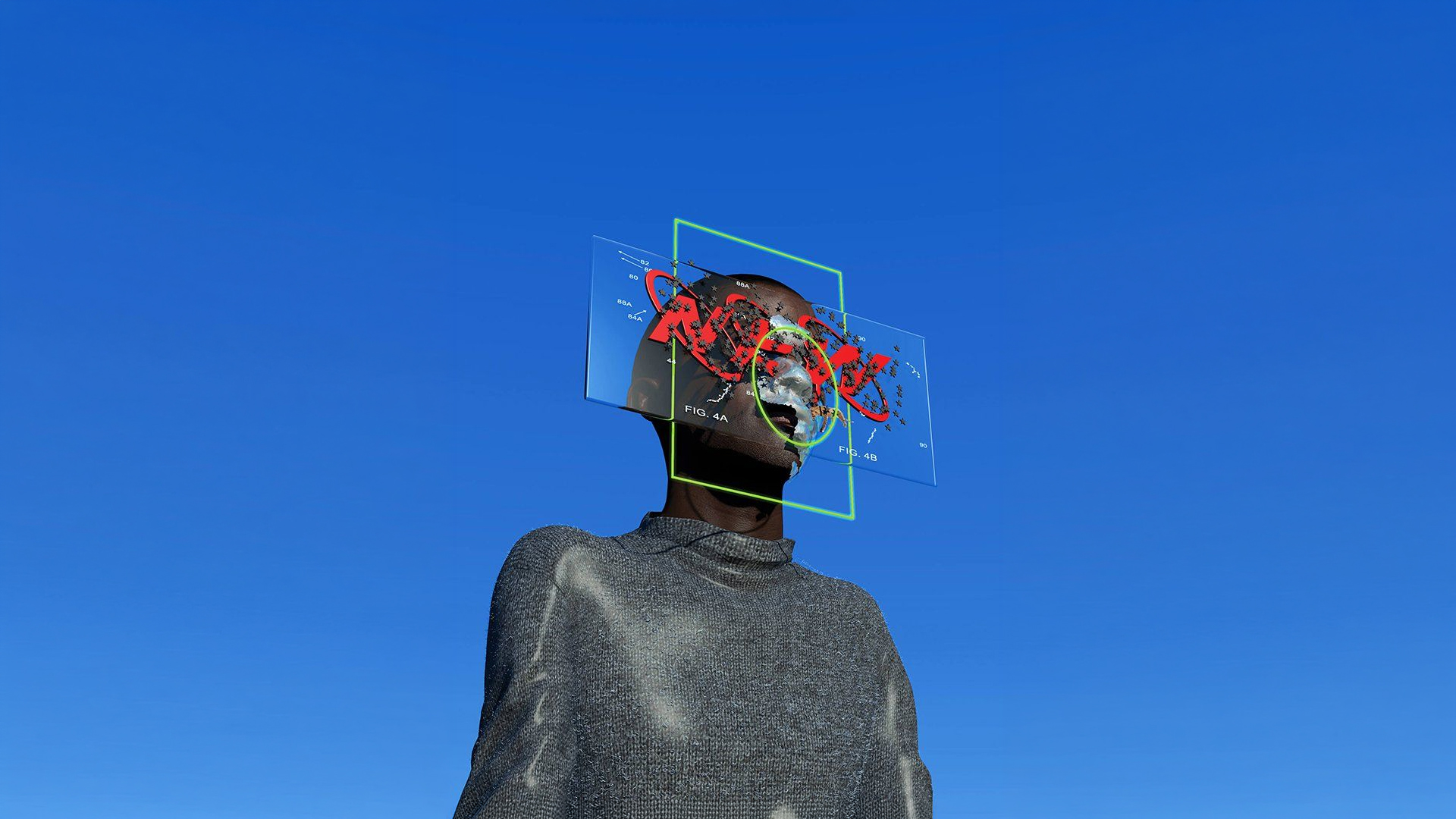
This simple idea lies at the heart of Christian Mio Loclair’s artistic practice. Rather than treating artificial intelligence as a tool for producing images, Loclair explores AI as a collaborator that generates new forms of perception and imagination. His works do not illustrate future technologies; they investigate how technology transforms the very way we think about ourselves.


Narciss exemplifies this approach. Instead of presenting a familiar vision of robots or futuristic machines, the work stages a moment of algorithmic self-reflection. It asks what happens when a machine becomes capable of generating images that appear to possess intention, memory, or even identity. The artwork is less concerned with predicting technological developments than with expanding the cultural imagination surrounding them.
As this essay argues, futures do not emerge first as products or innovations. They begin as images, narratives, and speculative possibilities that allow societies to think beyond the present. In this sense, Loclair’s work is not simply about artificial intelligence. It is about one of design’s most fundamental capacities: making the not yet imaginable.


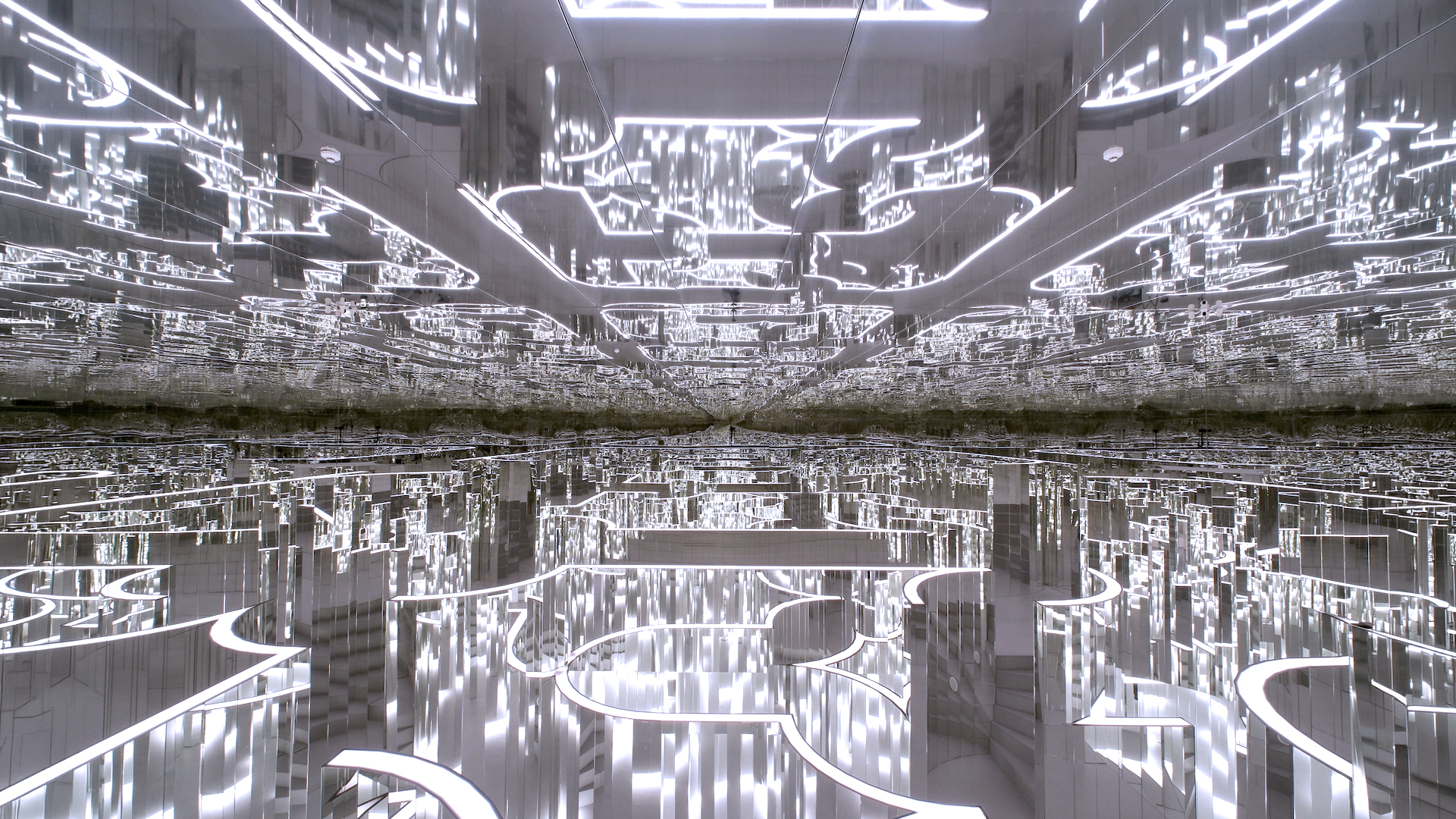
Another compelling example is Liam Young’s In Other Worlds. Blending architecture, speculative design, cinema, and emerging technologies, the project constructs immersive environments that invite audiences to inhabit futures before they exist. Rather than proposing definitive solutions, Young explores the cultural, environmental, and technological conditions that might shape tomorrow. His work demonstrates that design does not simply visualize possible futures. It creates experiential worlds in which those futures can be questioned, negotiated, and collectively imagined. In doing so, In Other Worlds transforms speculation into a form of cultural inquiry, reminding us that the future is first experienced in the imagination long before it is realized in the built environment.
Design is one of the most powerful of those acts. Yet imagination rarely operates through language alone.
Long before futures become policies or products, they become images. It is these images, and their remarkable capacity to transform uncertainty into something imaginable, that form the subject of the next part of this essay.
References
Anderson, B. (1983). Imagined Communities: Reflections on the Origin and Spread of Nationalism. Verso.
Bloch, E. (1986). The Principle of Hope (N. Plaice, S. Plaice, & P. Knight, Trans.). MIT Press. (Original work published 1954–1959)
Castoriadis, C. (1987). The Imaginary Institution of Society (K. Blamey, Trans.). MIT Press.
Dunne, A., & Raby, F. (2013). Speculative Everything: Design, Fiction, and Social Dreaming. MIT Press.
Goethe-Institut. (2024). Christian Mio Loclair.
Liam Young Studio. (2025). In Other Worlds. (Project documentation and exhibition materials.)
Vaihinger, H. (2009). The Philosophy of “As If”: A System of the Theoretical, Practical and Religious Fictions of Mankind. Routledge. (Original work published 1911)