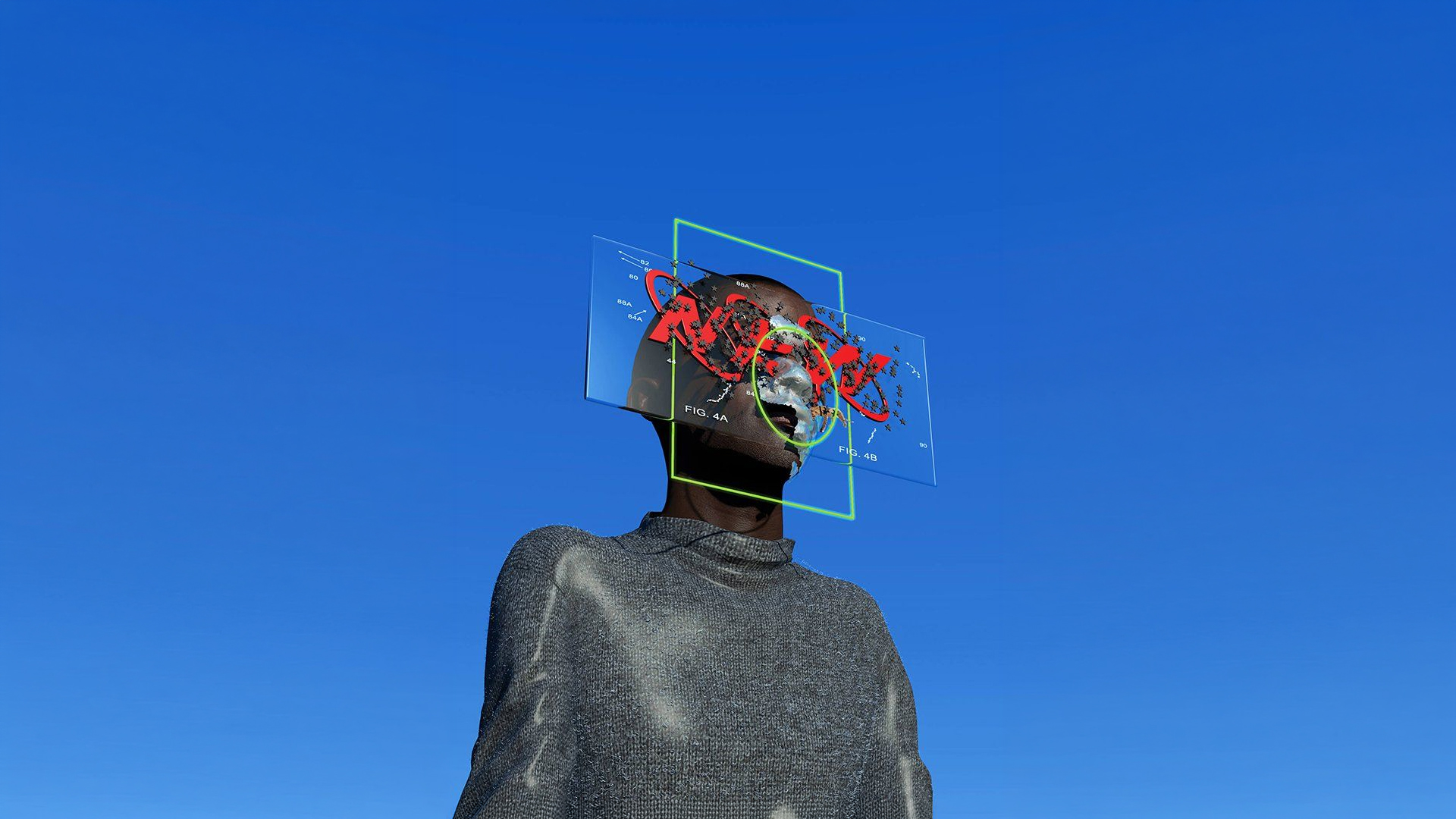
Marshall McLuhan and New Responsibilities
Discussions about digital technologies often follow a familiar pattern. Attention tends to focus on new applications, technical capabilities, or societal consequences. This is particularly evident in current debates surrounding artificial intelligence. Questions revolve around the quality of generated content, the automation of work processes, or which professions may be transformed by these developments. What is striking, however, is that these discussions almost always concentrate on what technologies do. Far less attention is given to how technologies alter the conditions under which social action takes place in the first place.
Podcast on Spotify
It is precisely at this point that the work of Marshall McLuhan regains its relevance. His frequently cited statement “We shape our tools and thereafter our tools shape us” is often understood as a general observation about the relationship between humans and technology. In reality, it points to something much more fundamental.


Technologies do not merely transform individual actions or processes. They transform the cultural environments within which those actions occur. Their influence therefore lies not only in their functions, but in the new forms of everyday life they produce. This perspective is particularly important today because digital media have reached a level of normality that increasingly renders their influence invisible.
The Invisibility of Successful Media
One of McLuhan’s central insights was that media become more powerful the less they are perceived as media. From a contemporary perspective, this observation appears remarkably accurate. Most people spend several hours each day within digital platforms, social networks, and algorithmically organized information systems. Yet comparatively little attention is given to the infrastructures that make these systems possible. Our focus is directed toward content as news, images, videos, and information, while the systems that organize this content remain largely unnoticed.


For McLuhan, this was precisely where the significance of media resided. Their impact does not primarily stem from the information they convey. It emerges through the habits, routines, and expectations they produce.
One of his most famous examples was electric light. Light carries no content in the conventional sense. Yet few technologies have transformed modern societies more profoundly. Working hours expanded, cities developed new rhythms, and traditional dependencies on daylight diminished. Its cultural impact did not arise from a message. It arose from a transformed environment. Digital media can be understood in a similar way. Their most profound effects may not lie in the information they provide, but in the conditions under which information is perceived, evaluated, and used.
From Tools & Infrastructures
Digital technologies are often described as tools. While this description is not incorrect, it has become increasingly insufficient. Tools are generally used situationally. They solve specific problems and then recede into the background. Digital media function differently. The smartphone accompanies nearly every aspect of contemporary life. It supports communication, navigation, scheduling, information access, documentation, and increasingly even knowledge work. For this reason, it may be more appropriate to think of digital technologies as infrastructures rather than tools.


Today, they form the basis of countless everyday practices. Navigation occurs within digital maps. Communication takes place inside digital platforms. Information seeking unfolds within algorithmically organized systems.
Technology is therefore no longer something that is simply used. It increasingly constitutes the context within which actions occur.
From a design perspective, this shift is particularly significant because it redirects attention away from individual artifacts and toward the design of environments.


The Production of New Habits
Historically, design was often associated with form-giving. The focus was placed on products, objects, and visual appearances. Digital systems have expanded this understanding. Many of the most influential digital products are successful not primarily because of their visual design, but because of their ability to establish new patterns of behavior. Their innovation often lies less in form than in repetition.


Push notifications, algorithmic recommendations, and endless content feeds are prominent examples. Technically, these are relatively simple mechanisms. Culturally, however, they reshape everyday routines. They establish new expectations regarding availability, immediacy, and responsiveness. They influence when attention emerges, how long it persists, and what interrupts it.


Digital products therefore design more than interfaces. They design temporal structures. They design expectations. And they design habits. Yet this dimension remains surprisingly absent from many discussions about technology.
AI and the Transformation of Knowledge Access
The rise of artificial intelligence makes these dynamics particularly visible. Most public discussions focus on capabilities. Can AI write? Can it code? Can it analyze? Can it design? These questions are undoubtedly important. From a media-theoretical perspective, however, another question may be even more significant: What changes occur when knowledge becomes increasingly accessible through dialogue? For centuries, access to knowledge was closely tied to processes of search and orientation. Information had to be researched, compared, and interpreted. Acquiring knowledge therefore involved uncertainty, effort, and exploration. AI systems fundamentally alter this situation. Information now appears in condensed forms. Summaries replace lengthy research processes. Complex subjects can be explained immediately. The distance between question and answer shrinks dramatically.


This undoubtedly increases efficiency. At the same time, it changes the experience of knowledge itself. When information is constantly available, expectations surrounding information access begin to change. When answers arrive instantly, the role of searching changes. And when orientation is continuously provided, uncertainty may lose its function as a productive component of learning and discovery. The cultural significance of AI may therefore lie less in the answers it generates than in the expectations it creates.
The Logic of Anticipation
Alongside these developments, another transformation can be observed. Digital systems no longer merely respond to human behavior. Increasingly, they attempt to anticipate it. Recommendation systems predict interests. As a result, the relationship between people and information begins to shift. Earlier information systems were largely organized around search. Contemporary systems are increasingly organized around anticipation. From the perspective of users, this often appears as convenience. From a design perspective, however, a different question emerges: What role does design play in a culture increasingly organized around prediction?
The New Responsibility of UX and UI
It is here that McLuhan’s theory becomes particularly relevant for contemporary design. If media create environments, and environments influence behavior, then UX and UI designers are designing far more than interfaces. They are designing conditions.


Richard Buchanan anticipated this shift in the 1990s when he argued that design should no longer be understood primarily as form-giving, but as the design of interactions and experiences. Attention moves from objects toward action.
Digital products, in this sense, are no longer static artifacts. They are systems that make certain behaviors more likely than others.


A particularly revealing example is the Infinite Scroll, developed by Aza Raskin. Technically, it is a simple innovation. Content loads continuously without requiring users to navigate to a new page. Culturally, however, this design decision fundamentally changes the relationship between users and information. The natural endpoint of an information space disappears. There is no longer a clear moment of completion. Attention is not concluded. It is extended.


A similar observation can be made regarding Pull-to-Refresh. The gesture appears almost trivial. A brief swipe updates content. Yet its simplicity is precisely what makes it effective. Every refresh promises the possibility of new information, new messages, or new forms of social validation. Numerous researchers and critics have pointed out that this interaction resembles the logic of variable reward systems commonly associated with slot machines. The design decision does not merely reside in the function. It resides in the expectation the function establishes. From McLuhan’s perspective, such interface patterns would not be minor technical details. They would be components of a media environment that produces specific forms of attention.
From Function to Consequence
At this point, the critique of Victor Papanek becomes particularly relevant. In Design for the Real World, he argued that designers are responsible for the social consequences of their work. Design does not end at the surface of a product. It continues through the social and cultural effects generated by its use. This perspective appears more relevant today than ever before.


The central question is no longer simply: Does an interface work? The more important questions are: What habits does it create? What expectations does it establish? What forms of attention does it encourage? Jaron Lanier has repeatedly addressed similar concerns. His critique is directed less toward digital technologies themselves than toward business models that transform human attention into a primary economic resource. From this perspective, design becomes part of an infrastructure that does not merely support behavior. It actively shapes it.
Conclusion
Perhaps the enduring significance of McLuhan’s work lies in its ability to push design beyond the surface. Digital products consist of more than functions, content, or interactions. They create environments. And these environments gradually shape how people perceive information, make decisions, and relate to knowledge.


The central challenge for UX and UI design is therefore not merely to make products more efficient or more intuitive. It is to understand the cultural consequences of the environments being designed. Because if McLuhan was right, designers today are not simply creating interfaces. They are shaping the conditions under which attention emerges, knowledge is organized, and behavior takes form. And perhaps that is the real responsibility of design in the age of AI and algorithms.


References
Buchanan, Richard. (1992). Wicked problems in design thinking. Design Issues, 8(2), 5–21.
Lanier, Jaron. (2018). Ten arguments for deleting your social media accounts right now. Henry Holt and Company.
McLuhan, Marshall. (1964). Understanding media: The extensions of man. McGraw-Hill.
McLuhan, Marshall. (1967). The medium is the massage: An inventory of effects. Bantam Books. (Mit Quentin Fiore)
Papanek, Victor. (1971). Design for the real world: Human ecology and social change. Pantheon Books.
Raskin, Aza. (2006, August 25). Humanized reader. Aza on Design.
Norman, Donald A.. (2013). The design of everyday things (Revised and expanded ed.). Basic Books.
Fry, Tony. (2009). Design futuring: Sustainability, ethics and new practice. Berg.
Krippendorff, Klaus. (2006). The semantic turn: A new foundation for design. CRC Press.
Thaler, Richard H.., & Sunstein, Cass R.. (2008). Nudge: Improving decisions about health, wealth, and happiness. Yale University Press.