Why Futures Need Images
If the future begins as imagination, another question immediately follows. How does imagination become shareable? Ideas alone are not enough. They exist privately, shaped by memory, experience, and individual expectation. For a future to influence collective action, it must become visible. It must acquire a form that can be discussed, questioned, criticized, or believed.


This is where images become indispensable. Long before technologies are built, political agendas formulated, or infrastructures constructed, societies begin to visualize them. Renderings, sketches, speculative illustrations, cinematic visions, architectural models, and concept videos do more than communicate future possibilities. They make those possibilities cognitively accessible.
The future, quite literally, needs images before it can become reality.
This observation invites us to reconsider one of the central assumptions about visual culture. Images are often treated as representations. They illustrate things that already exist. A photograph documents an event. A technical drawing describes an object. A map represents a territory. Future images operate differently. They cannot represent something that does not yet exist. Instead, they perform another function. They construct plausibility.

A rendering of a future city is not evidence that such a city will exist. A concept visualization of a new technology does not prove its feasibility. Yet these images allow us to imagine ourselves inhabiting these possible worlds. They reduce uncertainty by giving abstract possibilities a visible form.

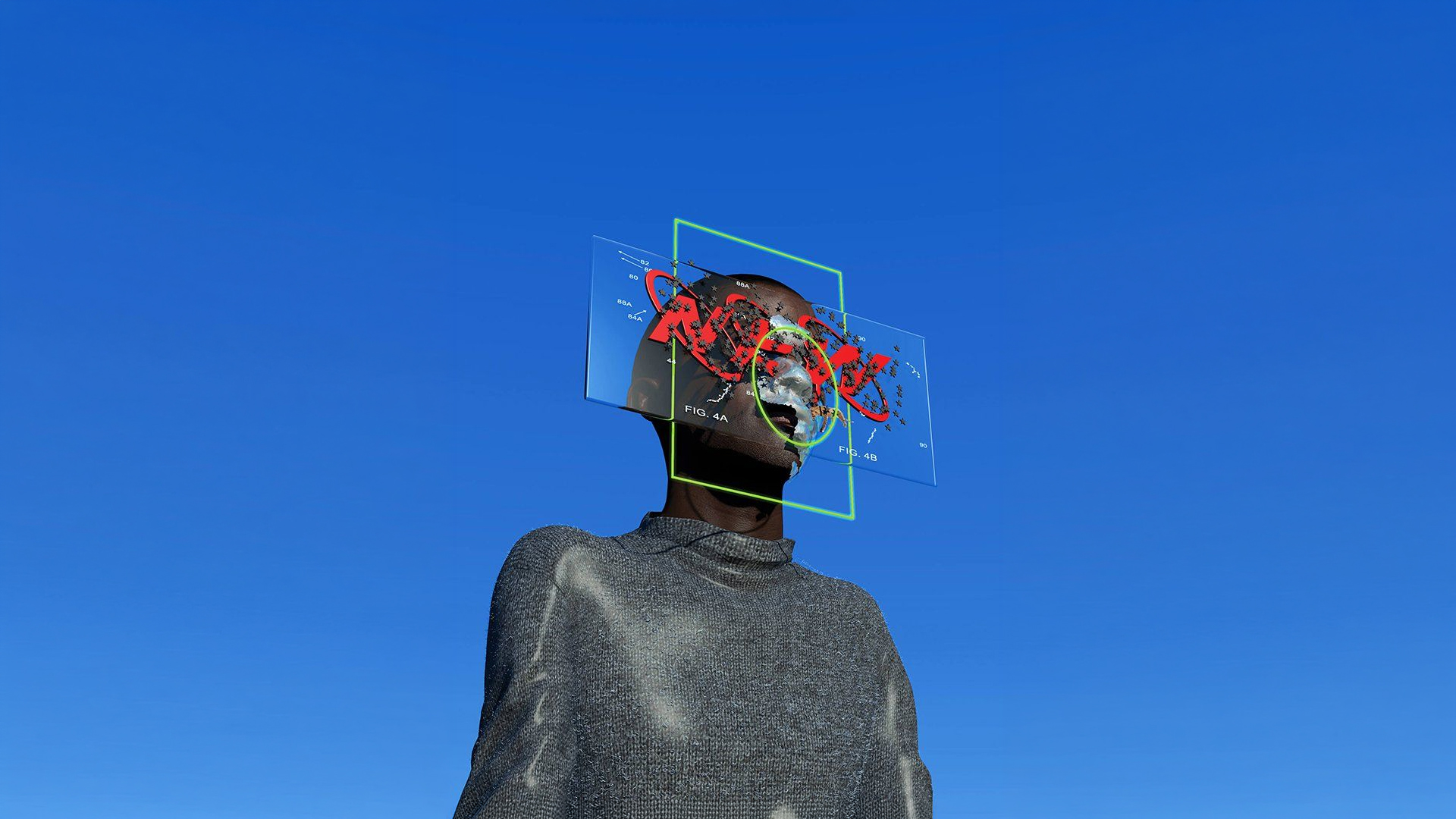
In this sense, images do not document the future. They produce a horizon within which the future becomes thinkable. Few thinkers anticipated this transformation as clearly as Vilém Flusser. Flusser argued that technical images differ fundamentally from traditional images. A painting reflects the gestures of an individual artist. A technical image, by contrast, emerges through apparatuses, programs, and systems of calculation. Photography, computer graphics, simulation, and digital visualization all belong to this new category.
For Flusser, these images are never neutral. They are programmed. And because they are programmed, they also program us. This argument is often interpreted as a critique of digital media. Yet it also reveals something essential about how we imagine the future. Contemporary futures are increasingly generated through technical images. Architectural renderings. Medical visualizations. Planetary simulations. Product animations. Artificial intelligence demonstrations.

Each of these images presents not an existing reality but a possible one. Their purpose is not to document what is, but to shape expectations about what might become. They function less as windows into the future than as instruments that organize our imagination. Flusser’s insight therefore acquires a new dimension. Technical images do not simply visualize technological futures. They actively participate in producing them. This becomes particularly evident when we examine how contemporary technology companies communicate innovation.

Consider Apple’s introduction of the Vision Pro. Months before most people could experience the device, they had already encountered it through meticulously crafted films, product renderings, keynote presentations, and carefully staged demonstrations. These visual narratives did not merely explain the technology. They established an entire experiential framework through which audiences could imagine spatial computing as part of everyday life. Whether the product ultimately succeeds is almost secondary. The important point is that its cultural existence began long before widespread adoption. It began as an image. The same pattern can be observed across many technological domains.


NASA rarely presents future space missions through engineering drawings alone. Instead, artists create vivid illustrations of lunar habitats, Martian research stations, or deep-space exploration. These images allow scientists, politicians, and the public to inhabit futures that remain technically distant. Similarly, SpaceX does not communicate Mars primarily through technical specifications. It communicates Mars through cinematic renderings of settlements, launch systems, and planetary landscapes. These visualizations transform an almost unimaginable engineering challenge into a collectively imaginable destination. The images do not predict these futures. They make them culturally accessible.

The sociologist Benedict Anderson offers an unexpected way of understanding why this matters. In Imagined Communities, Anderson famously argued that nations are not held together because every citizen knows every other citizen. Rather, they exist because people collectively imagine themselves as belonging to the same community. Communities, in other words, are sustained through shared imagination. Although Anderson wrote about nationalism, his argument extends surprisingly well to futures.

Technological futures also depend upon shared imaginaries.
No individual can fully comprehend artificial intelligence, quantum computing, or interplanetary colonization in all their complexity. Yet millions of people can orient themselves toward these futures because they share cultural images that render them imaginable.
The future therefore functions much like Anderson’s imagined community. It becomes real because enough people participate in the same vision. Design plays an essential role in creating those shared visions. This observation also helps explain why speculative visualizations possess such remarkable influence. When architects publish visionary projects, they are not merely presenting aesthetic proposals. When industrial designers produce concept vehicles, they are not forecasting manufacturing schedules. When filmmakers create believable future worlds, they are not predicting history. They are constructing common reference points.


Over time, these images accumulate. They begin to define what the future is supposed to look like. Think for a moment about how many people imagine tomorrow. Transparent interfaces. Autonomous vehicles. Vertical cities. Humanoid robots. Sustainable architecture. Immersive digital environments.
Most of these images did not emerge from scientific papers. They emerged through design, cinema, illustration, architecture, and speculative visualization. Our collective imagination is profoundly visual. This realization leads to an important shift in perspective. We often assume that technological development produces images. Perhaps the opposite is equally true. Images frequently precede technological development. They establish cultural expectations. They inspire research agendas. They attract investment. They shape political discourse.


In other words, they create the symbolic conditions under which innovation becomes possible. Design therefore occupies a position that extends far beyond aesthetics or communication. It mediates between imagination and reality. Every rendering. Every speculative illustration. Every concept video. Every prototype. These are not simply representations of possible futures. They are cognitive infrastructures through which societies negotiate what they consider desirable, plausible, or achievable.
The future does not become visible after innovation. Innovation often becomes possible because the future was made visible first. If images make futures imaginable, then another question inevitably arises.


Can design deliberately construct alternative futures rather than merely illustrating dominant ones?
This question has become central to contemporary design theory. It shifts the role of design from communicating future possibilities to actively creating new worlds in which different possibilities can be explored. It is precisely here that speculative design, worldbuilding, and design fiction become relevant, not as methods for predicting tomorrow, but as practices for expanding the range of futures we are capable of imagining. That is where the next part of this essay begins.